Around Annapurna via Thorang-La Pass
Trip Duration:
14 Nights & 15 Days
Max Altitude:
5416m
Activities:
Trekking
Start Point:
kathmandu
Ending Point:
Kathmandu
Region:
Annapurna Region
Trip Grade:
Difficult
Meals:
Breakfast, Lunch and Dinner
Accommodation:
Hotel / Tea House Lodge on the trek
Best Season:
Spring & Autumn
Trips Overview
The Annapurna Circuit Trek via Thorong La Pass is one of the most famous trekking routes in Nepal, offering an incredible journey around the Annapurna mountain range. The trek takes you through diverse landscapes, from green valleys and forests to high alpine terrain and the dry landscapes of Mustang.
One of the main highlights is crossing Thorong La Pass (5,416 m), which is one of the bighest trekking passes in the world. It is considered one of the most challenging and rewarding passes due to its altitude and dramatic Himalayan scenery.
The trek usually starts in the lower Marsyangdi Valley and passes through traditional villages like Chame, Pisang, and Manang, where trekkers acclimatize before crossing the pass. From Manang, the trail gradually climbs to Thorong Phedi and High Camp before the early morning ascent over the pass.
After crossing Thorong La, the route descends into the Mustang region, reaching Muktinath, a sacred pilgrimage site for both Hindus and Buddhists. The trek continues through Jomsom and ends with scenic views of the Kali Gandaki Valley, one of the deepest gorges in the world.
This trek is special because it combines high mountain adventure, cultural diversity, and dramatic landscape changes in one complete Himalayan journey.
Trips Highlights
- Thorong La Pass (5,416 m): Cross one of the highest trekking passes in the world, offering a challenging but unforgettable Himalayan experience with panoramic mountain views.
- Dramatic Landscape Changes Experience a unique journey from green valleys, rivers, and forests to high alpine deserts and the Mustang region’s dry landscapes.
- Traditional Mountain Villages Walk through beautiful villages like Chame, Pisang, and Manang, where you can experience local culture and Tibetan-influenced lifestyle.
- Stunning Himalayan Views Enjoy close views of Annapurna, Dhaulagiri, Manaslu, Gangapurna, and Tilicho Peak throughout the trek. ________________________________________
- Acclimatization in Manang Rest and acclimatize in Manang, a beautiful village surrounded by mountains, lakes, and monasteries.
- Sacred Muktinath Temple Visit Muktinath Temple, an important pilgrimage site for both Hindus and Buddhists.
- Kali Gandaki Valley Trek through one of the deepest gorges in the world, with strong winds and dramatic landscapes.
Include
- Warm welcome with meeting and assistance upon arrival and departure at the airport or hotel by representatives from The Crampon for Nepal Travel
- All transfers and sightseeing tours by air-conditioned vehicle as per group size
- Non-alcoholic welcome drink on arrival at the hotel
- Accommodation in 3-star hotels in Kathmandu and Pokhara on twin/double sharing basis with breakfast
- Domestic flight from Kathmandu – Pokhara - Kathmandu
- Experienced, licensed local tour guide (English, Spanish, or other major languages) during sightseeing in Kathmandu
- All monument entrance fees as per the itinerary
- During Tea House Trek: Necessary trekking permits: ACAP (Annapurna Conservation Area Permit) and TIMS card
- Duffle bag for trekking and basic first aid kit
- Accommodation in tea houses/lodges on twin or dormitory sharing basis
- Three meals a day during trek (Breakfast, Lunch, and Dinner) & Tea twice daily. Please note that each meal is served as a single serving.
- Government-licensed English-speaking trekking guide
- One porter for every two trekkers (maximum 8 kg per trekker)
- One assistant guide for groups above 6 people
- Trekking staff costs including salary, insurance, food, and accommodation
- Emergency helicopter rescue arrangement (as per your insurance coverage)
- Authentic Nepali farewell dinner with cultural program
- All applicable government taxes and service charges
Exclude
- International airfare to and from Kathmandu
- Excess baggage charges on domestic and international flights
- Nepal entry visa fee (payable in cash upon arrival at Kathmandu airport)
- Meals not mentioned in the itinerary
- Photography and video fees at monuments (if applicable)
- Charges for hot showers, Wi-Fi, and charging electronic devices during the trek
- Personal trekking equipment (sleeping bag, gear, etc.)
- Extra expenses due to unforeseen events (landslides, weather conditions, political unrest, strikes, etc.)
- Personal expenses such as laundry, phone calls, drinks, and snacks
- Tips for guides, porters, drivers, and restaurant staff (customary)
- Personal travel insurance (highly recommended, including helicopter rescue)
- Additional costs due to early return or extension of the trek/trip
- Any services not mentioned in the “Cost Includes” section
Trips Itinerary
Your flight into the Himalayas offers amazing views of famous peaks like Mt. Dorje Lakpa 6966m, Mt.Ganesh 7422m, Mt. Purbi Chhyachu 6637m, and Mt. Langtang 7227m (weather permitting), as you arrive in Kathmandu.
After completing immigration, you will be warmly welcomed at the airport by a representative from The Crampon for Nepal Travel and transferred to your hotel.
The rest of the day is free for you to relax or explore on your own. You can walk around Thamel, the main tourist area, known for its lively streets, restaurants, ATMs, money exchange services, and shops selling Nepali handicrafts, jewelry, clothes, and trekking gear.
Early in the morning, you depart Kathmandu by private or shared jeep. The drive first follows the Prithvi Highway, passing through rivers, terraced hills, and small towns. After reaching Besisahar or Dharapani area, the road becomes more rugged and off-road.
From here, the journey continues through mountain roads, waterfalls, forests, and deep valleys of the Marsyangdi River. You pass several villages and suspension bridges along the way, slowly entering the Annapurna region.
After around 8–10 hours of driving (depending on road condition), you reach Chame (2,710 m), the district headquarters of Manang.
Chame is a beautiful mountain town surrounded by forests and views of Lamjung Himal and Annapurna II. This is the official starting point of your trekking journey.
After breakfast, the trail starts with a gentle walk along the Marsyangdi River. You pass through beautiful pine forests, small villages, and apple orchards. The route offers great views of Annapurna II and Lamjung Himal along the way.
One of the highlights is crossing suspension bridges and walking through narrow river valleys with cliffs and waterfalls. As you go higher, the landscape becomes more open and dry.
After about 5–6 hours of trekking, you reach Pisang, a traditional village with Tibetan-style houses and stunning views of the Annapurna mountain range.
After breakfast, you take the upper trail via Upper Pisang, which is more scenic and rewarding than the lower route. The path climbs gradually above the valley, offering wide panoramic views of Annapurna II, Annapurna IV, Gangapurna, and Tilicho Peak.
You walk through traditional Tibetan-style villages, ancient monasteries, prayer flags, and dry alpine landscapes. The trail is mostly uphill but steady, with amazing viewpoints along the way.
After passing villages like Ghyaru and Ngawal (depending on the exact route), you gradually descend towards the Marsyangdi valley floor and reach Manang.
The trek takes about 6–7 hours, and you arrive at Manang, a beautiful high-altitude village surrounded by mountains, glaciers, and Buddhist culture. It is also an important place for acclimatization before crossing Thorong La Pass.
Acclimatization Day in Manang (3,540 m):This is an important rest day during the Annapurna Circuit Trek. The main purpose is to help your body adjust to the high altitude before heading toward Thorong La Pass. You stay in Manang for the night, but it is not a full rest day—you do a short hike and explore nearby places.
A popular hike is to Gangapurna Lake viewpoint or nearby hills above Manang.
From here, you get stunning views of: Gangapurna Glacier, Annapurna III & IV, Tilicho Peak ,The wide Manang valley . This short uphill walk helps your body adapt to altitude while enjoying amazing scenery.
After breakfast, you leave Manang and start a gradual ascent. The trail first climbs out of the village and enters a dry, high-altitude landscape. You will notice fewer trees and more alpine vegetation as you go higher.
Along the way, you pass small settlements like Gunsang and open yak grazing pastures, where you may see yaks and horses. The views of Annapurna III, Gangapurna, and Tilicho Peak remain impressive throughout the walk.
The path is mostly steady but includes some uphill sections, especially as you approach Yak Kharka. The air becomes thinner, so the pace is slow and steady.
After about 4–5 hours of trekking, you reach Yak Kharka, a quiet mountain settlement surrounded by wide valleys and snow-capped peaks. It is an important stop for rest before continuing toward Thorong Phedi and higher altitude.
After breakfast, the trail begins with a gradual climb across open alpine terrain. You pass yak grazing areas and small stone shelters while enjoying wide views of the surrounding mountains like Annapurna III and Gangapurna.
The path includes a few gentle ups and downs, but as you gain altitude, the air becomes thinner and the walk feels slower. You may also cross landslide-prone sections carefully along the way.
After about 3–4 hours of trekking, you reach Thorong Phedi, the final main stop before crossing Thorong La Pass (5,416 m). It is a basic but important settlement where trekkers rest and prepare for the early morning pass crossing.
Some trekkers also choose to go further up to High Camp for a shorter summit day, depending on weather and fitness.
You begin very early in the morning (around 3–4 AM). The trail first climbs steadily to High Camp (if not already stayed there), then continues uphill on a steep, rocky path.
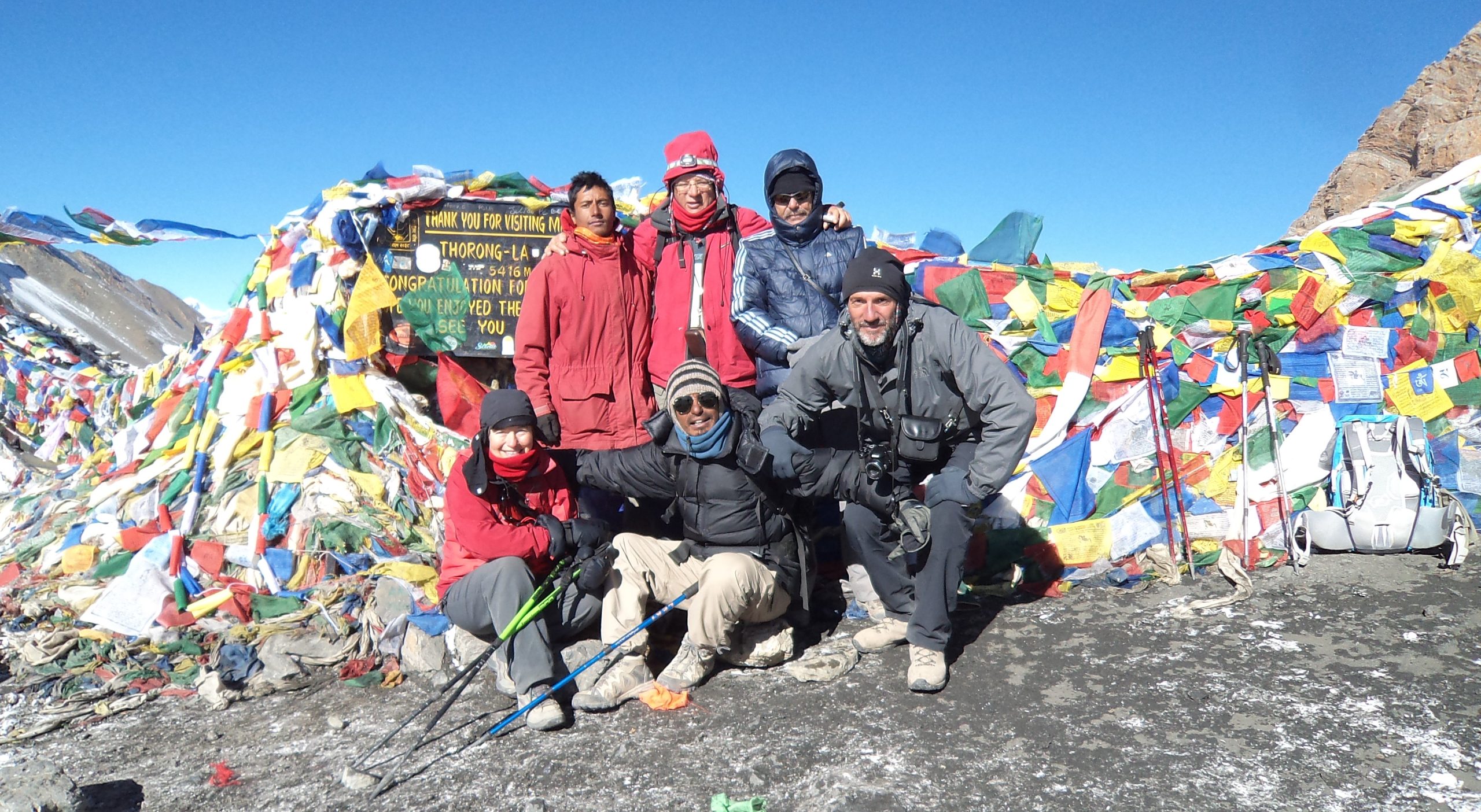
The air is thin, so the walk is slow and steady. You will see stunning sunrise views over snowy peaks as you gain altitude. You reach Thorong La Pass (5,416 m), one of the highest trekking passes in the world.
From the top, you can see breathtaking panoramic views of Annapurna, Dhaulagiri, and Mustang landscapes. Prayer flags mark the summit, making it a very emotional and rewarding moment.
After spending some time at the pass, you begin a long descent toward Muktinath Temple (3,800 m).
The trail goes down steeply at first, then gradually becomes easier as you enter the dry Mustang region. You pass through rocky landscapes, windy valleys, and small settlements.
After about 8–10 hours total trekking, you reach Muktinath, a sacred pilgrimage site for both Hindus and Buddhists, known for its eternal flame and 108 holy water spouts.
From Muktinath Temple (3,800 m), you trek down to Jomsom (2,720 m) on the Annapurna Circuit Trek. After breakfast, the trail descends gradually through the dry and windy landscapes of Mustang. You pass small villages like Kagbeni (depending on the route), with beautiful views of Dhaulagiri, Nilgiri, and the wide Kali Gandaki Valley.
The walk is mostly downhill and takes about 5–6 hours. As you continue, the landscape becomes more open and windy as you enter the famous Kali Gandaki valley. Finally, you arrive in Jomsom, a small mountain town and transport hub known for its airport, lodges, and stunning mountain scenery.
After breakfast, the trail follows the Kali Gandaki Valley, mostly on a wide, windy path with beautiful views of Dhaulagiri and Nilgiri. The walk is relatively easy and gradual, passing through dry landscapes, small settlements, and apple orchards along the way.
After about 3–4 hours of trekking, you reach Marpha, a charming Thakali village famous for its whitewashed houses, stone-paved streets, and delicious apple products like apple pie, cider, and dried apples. It is a peaceful and culturally rich stop before continuing your journey.
The drive follows the beautiful Kali Gandaki Valley, passing through traditional villages, apple orchards, and dry Himalayan landscapes. Along the way, you enjoy stunning views of snow-capped peaks like Dhaulagiri and Nilgiri, as well as deep gorges and river crossings.
As you descend further, the landscape gradually changes from high mountains to green hills and warmer surroundings. The road can be bumpy in some sections, but it offers a true adventure experience through remote Mustang scenery.
After around 7–9 hours of driving, you arrive in Pokhara, where you can relax by the lakeside and enjoy the peaceful city atmosphere after your long Himalayan journey.
After breakfast, there is a sightseeing of Pokhara City.
Davis Falls (Patale Chhango): Davis Falls is a unique waterfall where water flows directly into an underground tunnel. It is especially powerful during monsoon season. According to local legend, the name comes from a visitor who accidentally fell into the water channel. It is a popular and easy stop for visitors to see natural water force and take photos
World Peace Pagoda: World Peace Pagoda is a beautiful white Buddhist stupa located on a hilltop above Pokhara. It was built to promote peace and harmony. From here, you get stunning panoramic views of Phewa Lake, Pokhara city, and the Annapurna mountain range. The peaceful environment makes it perfect for relaxation and meditation.
Boating on Phewa Lake: Phewa Lake is the second-largest lake in Nepal and the heart of Pokhara. Boating here is a very relaxing experience, where you can row across calm waters surrounded by green hills and mountain reflections. In the middle of the lake, you can visit Tal Barahi Temple, a small island shrine dedicated to the Hindu goddess Barahi.
After these sightseeing, rest of the day, freetime.
After breakfast in Pokhara, you take a short scenic flight to Kathmandu. The flight usually takes around 25–30 minutes and offers beautiful aerial views of green hills, rivers, and, on clear days, distant Himalayan peaks. It is a comfortable and quick way to return to the capital after your trip in the mountains.
Upon arrival in Kathmandu, you directly continue for sightseeing to Patan Durbar Square. This UNESCO World Heritage Site is located in the ancient city of Patan and is famous for its rich Newari culture and artistic heritage. The square features beautifully carved temples, courtyards, and the historic royal palace area.
During your visit, you can explore highlights such as Krishna Mandir, ancient stone sculptures, and traditional wooden architecture that reflects Nepal’s fine craftsmanship. The area is also lively with local life, small shops, and artisans working on traditional art.
After sightseeing, you return to your hotel in Kathmandu and relax, marking a cultural and peaceful end to your journey.
First, visit Kathmandu Durbar Square, the historic royal palace area of the Malla kings. This place is full of ancient temples, courtyards, and traditional Newari architecture. You can see highlights like the old royal palace, beautifully carved wooden windows, and the sacred Kumari Ghar where the Living Goddess lives. The square is also rich in cultural life and local activities.
After that, we will visit Swayambhunath Stupa, a UNESCO World Heritage Site with a history of over 2,500 years. It sits on a hilltop and offers great views of the city. The area is also known for its many monkeys, so it is often called the Monkey Temple.
This sacred site is a mix of both Buddhist and Hindu traditions, with many shrines, chaityas, and monasteries around. Despite the 2015 earthquake, the stupa remains strong and is still one of Kathmandu’s most loved landmarks.
You can see beautiful carvings, smell incense and butter lamps, and experience a peaceful spiritual atmosphere. Visitors and devotees walk around the stupa (a ritual called circumambulation) while spinning prayer wheels set into its base. The area is also surrounded by traditional houses of priests and monks.
Then after,continue to Boudhanath Stupa, one of the largest Buddhist stupas in the world. It is a peaceful and spiritual place, especially important for Tibetan Buddhism. The huge white dome with the all-seeing eyes of Buddha creates a calm and powerful atmosphere.
Airport Distance: 6 km (about 30 minutes drive)
Enjoy a relaxed breakfast. The morning is free for your own activities. At the scheduled time, you will be transferred to the airport for your departure flight.
We wish you a safe journey and hope to welcome you again in the future.
End of Service.
Reviews

Nature’s Untouched Masterpiece
Upper Dolpo is a hidden gem of Nepal. The scenery, wildlife, and peacefulness are unmatched. The trek was well-organized, and the guides were knowledgeable and friendly. Truly an adventure of a lifetime!Upper Dolpo is a hidden gem of Nepal. The scenery, wildlife, and peacefulness are unmatched. The trek was well-organized,…

John Doe
,Usa
Challenging but Rewarding
This trek tested my limits, but the reward was seeing the untouched Dolpo region. From high-altitude passes to the serene Shey Phoksundo Lake, every moment was magical. The guides ensured safety and comfort throughout. I can’t wait to return!
Emily Walker
,UK
A Journey Like No Other
Trekking Upper Dolpo was an unforgettable experience. The landscapes were untouched, the local culture fascinating, and the guides were extremely professional. Every day brought new adventures and breathtaking views. Highly recommended for serious trekkers!
Sarah Thompson
,USA