Upper Mustang Trekking ( The Hidden Valley Lo Manthang)
Trip Duration:
16 Nights and 17 Days
Max Altitude:
3860 m/ 12664 ft
Activities:
Trekking
Start Point:
Kathmandu
Ending Point:
Kathmandu
Region:
Annapurna Region
Trip Grade:
Moderate
Meals:
Kathmandu, Pokhara: 5 Breakfast / Trekking: 11 Breakfast, 11 Lunch, and 11 Dinner
Accommodation:
Kathmandu, Pokhara: Hotel/ Trekking: Trekking Lodges
Best Season:
Spring: March-May Autumn: September- November (though Summer also offers a unique experience due to minimal rainfall)
Group Size:
Minimum 2 pax
Trips Overview
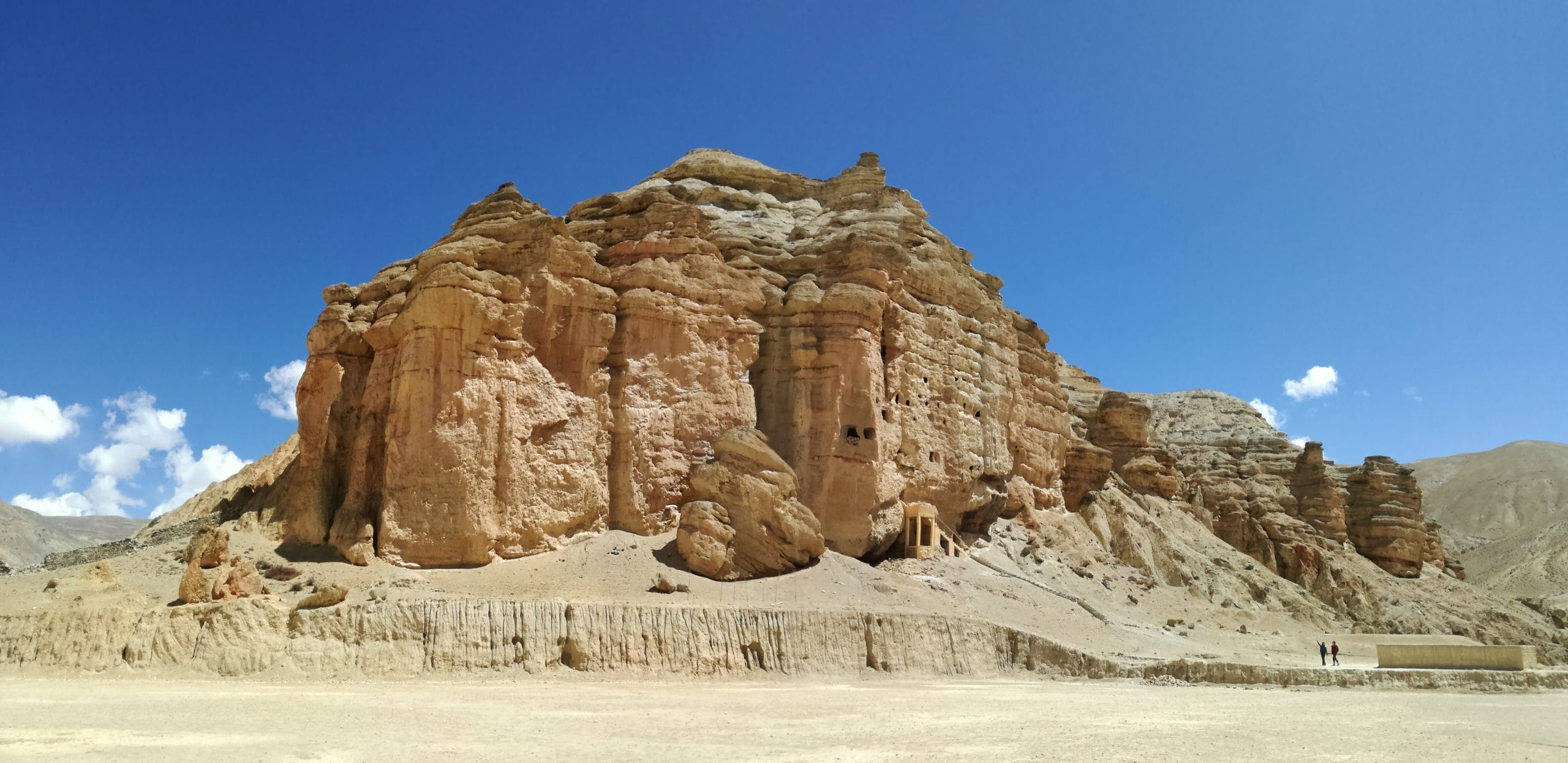
The Upper Mustang trek, leading to the ancient walled city of Lo Manthang, is one of Nepal’s most unique and culturally rich journeys. Often called the “Last Forbidden Kingdom,” this remote region lies in the rain shadow of the Annapurna and Dhaulagiri ranges, offering a dramatic landscape of arid cliffs, deep canyons, and wind-carved valleys that feel more like the Tibetan plateau than typical Himalayan terrain.
Starting from Jomsom or Kagbeni, the trail gradually ascends through traditional villages, ancient monasteries, and vast open landscapes. The route passes through historic settlements such as Chele, Ghami, and Tsarang (Charang) before reaching Lo Manthang, the cultural heart of Upper Mustang. Along the way, trekkers experience centuries-old Tibetan Buddhist traditions, colorful prayer flags, chortens, and caves carved into cliffs.
This trek is considered moderate in difficulty, with most days involving 5–7 hours of walking at altitudes ranging between 2,800m and 4,000m. Unlike other trekking regions in Nepal, Upper Mustang is accessible even during the monsoon season due to its dry climate, making it an excellent choice for summer trekking.
A special restricted area permit is required to enter Upper Mustang, helping preserve its fragile culture and environment. The best seasons to visit are spring (March–May) and autumn (September–November), though summer also offers a unique experience due to minimal rainfall.
Trips Highlights
- Explore the Forbidden Kingdom of Mustang: Step into a once-restricted region that remained isolated from the outside world until 1992. The ancient kingdom still retains its unique traditions, language, and lifestyle influenced by Tibetan Buddhism.
- Visit the Walled City of Lo Manthang: Discover the centuries-old capital surrounded by high mud-brick walls. Inside, you’ll find royal palaces, narrow alleys, and important monasteries like Jampa Monastery and Thubchen Monastery, rich with ancient murals and spiritual history.
- Unique Desert Landscape of the Himalayas: Unlike the green hills of other trekking regions, Upper Mustang lies in the rain shadow of Annapurna and Dhaulagiri, offering a striking landscape of red cliffs, eroded canyons, and vast open valleys.
- Scenic Trek Along the Kali Gandaki Valley: Walk through the world’s deepest gorge carved by the Kali Gandaki River, passing through windswept trails, suspension bridges, and ancient trade routes connecting Nepal and Tibet.
- Authentic Tibetan Culture & Lifestyle: Experience traditional villages like Kagbeni and Ghami, where locals still follow centuries-old customs, wear traditional dress, and practice Tibetan Buddhism.
- Ancient Sky Caves and Cliff Dwellings: Witness mysterious man-made caves carved high into cliffs, believed to be over 2,000 years old, used historically for meditation, burial, and shelter.
- Cross High Mountain Passes: Enjoy breathtaking views from passes such as Nyi La Pass (4,010m) and Lo La Pass, offering panoramic views of the Mustang landscape.
- Rich Buddhist Heritage: Encounter chortens, mani walls, prayer flags, and monasteries at every step, giving a deep spiritual atmosphere throughout the trek.
- Ideal Trekking Even During Monsoon: Thanks to its location in a dry rain-shadow region, Upper Mustang is one of the few treks in Nepal suitable during the monsoon season.
- Restricted Area – Preserved Culture: A special permit is required, which helps maintain the region’s authenticity, making your journey feel exclusive and less crowded compared to other trekking routes.
Include
- Airport assistance on arrival and departure will be provided by representatives of The Crampon for Nepal Travel at both the airport and hotel.
- All ground transfers in Kathmandu will be arranged in air-conditioned vehicles according to the group size.
- A non-alcoholic welcome drink will be served upon arrival at the hotel.
- Accommodation will be provided in comfortable three-star hotels in Kathmandu and Pokhara on a twin/double sharing basis, including bed and breakfast.
- Entrance fees for all monuments and heritage sites included in the scheduled city sightseeing program will be covered.
- An experienced local tour guide, fluent in English, Spanish, or other major languages, will accompany the sightseeing tours in Kathmandu.
- During Tea House Trekking: Domestic flight: Kathmandu – Pokhara- Kathmandu (as per itinerary)
- Trekking permits including ACAP ( Annapurna Conservation Area Project) and TIMS Card ( Tourist Information Management System Card)
- Accommodation in tea houses/lodges on twin or dormitory sharing basis
- Three standard meals per day during the trek (Breakfast, Lunch, and Dinner) & Tea twice daily. Please note that each meal is served as a single serving.
- Services of a government-licensed, English-speaking trekking guide
- Porter service on a 1 porter for 2 trekkers basis (luggage limit: up to 8 kg per trekker)
- One assistant guide for groups exceeding 6 participants
- Full support for trekking staff including salary, insurance, equipment, meals, and accommodation
- First aid medical kit and basic emergency support during the trek
- Duffle bag provided for trekking use
- Helicopter rescue coordination in case of emergency (as per valid travel insurance policy)
- Farewell dinner
- All applicable government taxes and service charges
Exclude
- International airfare to and from Kathmandu
- Nepal entry visa fee (payable in cash upon arrival at Kathmandu Airport)
- Any meals not specified in the itinerary
- Photography fees at monuments or heritage sites, if applicable
- Charges for Wi-Fi and electronic device charging during the trek (if applicable)
- Hot shower services during the trekking period, where applicable
- Additional costs arising from unforeseen circumstances such as landslides, political unrest, weather conditions, strikes, or natural events
- Personal expenses including laundry, telephone calls, snacks, beverages, and other items not mentioned in the itinerary
- Personal trekking equipment and gear
- Tips for guides, porters, drivers, and restaurant staff (customary but not mandatory)
- Personal travel insurance, including coverage for emergency helicopter evacuation (strongly recommended)
- Any additional expenses for accommodation, transport, or services if the trek is interrupted or changed before or after the scheduled program
- Any services or items not specifically mentioned in the “Included Services” section
Trips Itinerary
Your flight into the Himalayas offers amazing views of famous peaks like Mt. Dorje Lakpa, Mt. Ganesh, Mt. Purbi Chhyachu, and Mt. Langtang (weather permitting), as you arrive in Kathmandu.
After completing immigration, you will be warmly welcomed at the airport by a representative from The Crampon for Nepal Travel and transferred to your hotel.
The rest of the day is free for you to relax or explore on your own. You can walk around Thamel, the main tourist area, known for its lively streets, restaurants, ATMs, money exchange services, and shops selling Nepali handicrafts, jewelery, clothes, and trekking gear.
Max Altitude:1330 m
Accommodation:Hotel
The scenic flight from Kathmandu to Pokhara is a short yet breathtaking journey of approximately 25 minutes, offering one of the most spectacular aerial views in Nepal. Shortly after takeoff, the aircraft flies parallel to the Himalayan range, allowing passengers to witness a stunning panorama of snow-capped peaks. On clear days, you can enjoy views of iconic mountains such as Langtang Lirung, Ganesh Himal, Manaslu, Annapurna, and the beautifully shaped Machhapuchhre (Fishtail).
As the flight progresses westward, the landscape changes from the densely populated Kathmandu Valley to rolling green hills, deep river valleys, and terraced farmlands. The final approach into Pokhara is especially dramatic, with close-up views of the Annapurna range rising sharply above the valley floor. This short flight not only saves time compared to a long road journey but also serves as a memorable introduction to the natural beauty of Nepal and the Himalayas.
After arrived in Pokhara Airport, we go to the Hotel, do check-in and free time and explanation for tomorrow’s program.
Max Altitude:950 m
Accommodation:Hotel
Meal:Breakfast Lunch
Early in the morning, we wake up and go to the airport for a short and scenic flight from Pokhara to Jomsom. During the flight, you can enjoy beautiful views of the Himalayas, deep valleys, and the famous Kali Gandaki River. Jomsom is an important gateway to the Mustang region, known for its strong winds and unique landscape.
After landing, we start our trek by walking through Jomsom town. We cross a small bridge and then follow a gentle trail along the river valley. The walk is easy and pleasant, with stunning views of dry hills, rocky cliffs, and snow-capped mountains. After a few hours, we reach Kagbeni, a beautiful and historic village.
In the afternoon, you have time to explore Kagbeni. This village is very special, with narrow alleys, old houses, and traditional mud walls decorated with unique clay figures. You can also hike up a nearby hill for a great panoramic view. From there, you can see the valley leading towards Upper Mustang and even imagine the ancient trade routes that once connected this region to places like Dolpo.
Max Altitude:2800 m
Accommodation: Trekking Lodges
Meal:Breakfast Lunch Dinner
Trek time: 5 to 6 hours
After breakfast, we begin our exciting journey towards Upper Mustang, entering a more remote and culturally rich part of the Himalayas. The trail follows the wide and windy valley of the Kali Gandaki River, one of the deepest river gorges in the world. As we walk, strong winds often blow through the valley, especially later in the morning, adding a bit of challenge to the trek. The landscape here is dry and dramatic, with eroded cliffs, sandy paths, and stunning views of the surrounding mountains.
Along the way, we reach Tangbe Village, a beautiful traditional settlement. The houses here are white-washed and closely built, giving the village a very clean and organized look. You will see fields of buckwheat, barley, and seasonal crops surrounding the village, along with apple orchards that are typical of the Mustang region. The culture here is strongly influenced by Tibetan traditions, which can be seen in the architecture, prayer flags, and daily life of the local people.
From Tangbe, the trail gradually climbs along a ridge, offering wider views of the valley and surrounding hills. After a steady walk, we finally reach Chele, a small village located on a hillside. From here, you can enjoy peaceful views of the rugged landscape and feel the unique atmosphere of Upper Mustang, which was once an ancient kingdom.
Max Altitude:3050 m
Accommodation: Trekking Lodges
Meal:Breakfast Lunch Dinner
Today’s trek becomes more challenging as we gain altitude and cross two high mountain passes. First, we climb up to Taklam La Pass at 3,624 meters, followed by Darjori La Pass at 3,735 meters. The uphill sections can be steep and tiring, but the effort is rewarded with breathtaking views of the surrounding Himalayan landscape, including dry cliffs, colorful rock formations, and distant snow-covered peaks. Along the way, you will also notice mysterious caves carved into the hillsides, which add a sense of history and adventure to the journey.
After crossing the passes, the trail gradually descends into the peaceful village of Samar Village, surrounded by poplar trees and small fields. From Samar, we continue walking along a ridge with beautiful valley views before descending again on a steeper path towards Syangmoche. This part of the trek offers a mix of challenging terrain and scenic beauty, making it one of the most interesting days of the Upper Mustang journey.
Max Altitude:3475 m
Accommodation: Trekking Lodges
Meal:Breakfast Lunch Dinner
Today is another exciting but demanding day as we cross two high mountain passes and walk through beautiful landscapes. After breakfast, we begin our climb towards Yamada La Pass (3,850m). Along the way, you will see many chortens (Buddhist shrines), prayer flags, and small traditional villages surrounded by barley fields. These scenes give a strong feeling of Tibetan culture and local mountain life.
The trail then continues through patches of juniper and pine forest, which is quite unique in this dry region. After this peaceful section, we make another steady climb to reach Nyi La Pass (4,010m), the highest point of the day. From the top, you can enjoy wide views of the barren hills and distant snow peaks.
From Nyi La, the trail descends gradually towards Ghami, one of the larger villages in Upper Mustang. Ghami is beautifully located in a wide valley and is surrounded by fields of barley and other crops. The village has a peaceful atmosphere, with traditional houses and ancient structures, making it a perfect place to rest and experience the local culture after a long trekking day.
Max Altitude:3500 m
Accommodation: Trekking Lodges
Meal:Breakfast Lunch Dinner
The trek from Ghami to Tsarang (Charang) is one of the most culturally rich and visually rewarding days in Upper Mustang. The trail begins with a gentle walk through the village, passing fields of barley and traditional stone houses before crossing a small river.
Soon after, trekkers encounter one of the longest and most impressive mani walls in the Mustang region, beautifully carved with Buddhist prayers and symbols. Following this spiritual pathway, the trail ascends gradually to the Tsarang La Pass (around 3,870m), offering wide views of the surrounding desert landscape and eroded cliffs.
After crossing the pass, the route descends into a dramatic canyon, with striking red and ochre rock formations typical of Upper Mustang’s unique terrain. Crossing a river again, the final climb leads up to Charang, a picturesque village set on a ridge.
Charang is known for its impressive white dzong (fortress) and ancient monastery, making it an important cultural stop before reaching Lo Manthang. The village offers a peaceful atmosphere, rich Tibetan-influenced traditions, and stunning views of the Mustang landscape.
This day typically involves 5–6 hours of trekking and is considered moderate in difficulty, with gradual ascents and descents throughout the journey.
Max Altitude:3560 m
Accommodation: Trekking Lodges
Meal:Breakfast Lunch Dinner
The trek from Tsarang (Charang) to Lo Manthang is one of the most exciting days of the Upper Mustang journey, as you finally reach the legendary walled capital of the former Mustang Kingdom.
The day begins with a descent from Charang, crossing a canyon and a river before gradually ascending through vast, open landscapes. The trail offers spectacular views of the Mustang valley, with its unique desert-like terrain, colorful cliffs, and distant snow-capped peaks.
As you continue, the path climbs steadily towards Lo La Pass (around 3,950m), one of the final high points before reaching Lo Manthang. From the top, trekkers are rewarded with the first breathtaking view of the walled city of Lo Manthang, standing isolated in the wide valley—an unforgettable moment of the trek.
From the pass, the trail gently descends across a plateau, leading directly to the ancient city. Surrounded by high mud-brick walls, Lo Manthang welcomes you with its rich history, traditional houses, monasteries, and royal palace.
This trek typically takes about 4–5 hours and is considered moderate, with gradual ascents and descents. Reaching Lo Manthang marks the highlight of the Upper Mustang trek, offering deep cultural immersion and a glimpse into a preserved Himalayan kingdom.
Max Altitude:3770 m
Accommodation: Trekking Lodges
Meal:Breakfast Lunch Dinner
Today is a rest and exploration day in Lo Manthang, allowing you to fully experience the culture and history of this ancient Himalayan kingdom. After breakfast, instead of staying only inside the walled city, you take an exciting excursion to the nearby village of Chhosar, located about 2–3 hours walk from Lo Manthang.
The highlight of the day is the visit to the mysterious Chhosar Caves, a series of ancient man-made caves carved high into the cliffs. These caves are believed to be over 2,000 years old and were historically used for meditation, shelter, and even burial purposes. Exploring these multi-story caves offers a unique glimpse into the early civilization and spiritual life of the Mustang region.
Along the way, you will also visit the impressive Niphu Monastery, one of the oldest monasteries in the area, set dramatically against a rocky hillside. The trail itself is equally rewarding, with stunning views of the arid Mustang landscape, eroded cliffs, and traditional villages.
After exploring Chhosar, you return back to Lo Manthang in the afternoon, where you can spend the remaining time wandering through the narrow alleys, visiting monasteries, or simply relaxing and enjoying the peaceful atmosphere of this historic city.
This day is relatively easy and flexible, combining short hiking with rich cultural exploration, making it one of the most memorable experiences of the Upper Mustang trek.
Max Altitude:3770 m
Accommodation: Trekking Lodges
Meal:Breakfast Lunch Dinner
After exploring the ancient city of Lo Manthang, the trek continues towards Dhakmar, offering a completely different perspective of the Mustang landscape. Instead of retracing the same route, this day follows an alternative and more scenic trail via high passes and remote villages.
Leaving Lo Manthang, the trail gradually ascends through wide valleys and barren hills, passing small settlements and ancient chortens. One of the highlights of the day is crossing the high pass of Chogo La Pass (around 4,280m), which offers breathtaking panoramic views of the Upper Mustang region, including distant Himalayan peaks and vast desert-like terrain.
From the pass, the trail descends towards the village of Ghar Gompa, one of the oldest monasteries in the region, believed to be over 1,200 years old and deeply connected to the history of Tibetan Buddhism. After visiting this sacred site, the trek continues through dramatic landscapes to reach Dhakmar.
Dhakmar is famous for its striking red cliffs, formed by natural erosion and rich in local legends. The vibrant rock formations create one of the most unique and photogenic landscapes in Upper Mustang, especially during sunset when the colors become even more intense.
This is a longer and slightly challenging day, typically taking 6–7 hours of trekking, but it rewards trekkers with stunning scenery, cultural heritage, and a less-traveled route back from Lo Manthang.
Max Altitude:3800 m
Accommodation: Trekking Lodges
Meal:Breakfast Lunch Dinner
The trek from Dhakmar to Ghiling is a scenic and culturally rich journey through the heart of Upper Mustang. The day begins with a gradual climb out of Dhakmar, passing beneath its famous red cliffs, which glow beautifully in the morning light.
The trail ascends steadily towards Ghami La Pass (around 3,765m), offering wide panoramic views of Mustang’s dramatic desert landscape, with eroded hills, deep valleys, and distant snow-capped peaks. Along the way, trekkers pass chortens, mani walls, and prayer flags, reflecting the deep spiritual atmosphere of the region.
After crossing the pass, the route descends gently toward the village of Ghiling, a peaceful settlement surrounded by fields and rolling hills. Compared to other villages in Upper Mustang, Ghiling feels more open and quiet, providing a relaxing environment after a day of trekking.
This trek typically takes about 5–6 hours and is considered moderate, with gradual ascents and descents. It is a rewarding day filled with natural beauty, cultural encounters, and ever-changing landscapes.
Max Altitude:3860 m
Accommodation: Trekking Lodges
Meal:Breakfast Lunch Dinner
The trek from Ghiling to Chhuksang is a long but rewarding day as you gradually descend from the upper reaches of Mustang back toward the Kali Gandaki valley. The trail begins with a gentle descent through open landscapes, passing traditional villages and cultivated fields.
As you continue, the route leads toward Ghami, where you can again see the famous mani walls and traditional architecture. From here, the trail follows a series of ascents and descents across dry hills and wide valleys, showcasing the unique desert-like terrain of the region.
Further along, you retrace part of the earlier route, passing through settlements like Samar and descending through dramatic gorges and wind-eroded cliffs. The landscape gradually becomes greener as you approach the lower Mustang region.
Finally, you reach Chhuksang, a charming village situated along the banks of the Kali Gandaki River. The village, with its whitewashed houses and narrow alleys, marks a transition point between Upper and Lower Mustang and offers a peaceful place to rest after a long day.
This trek typically takes about 6–7 hours and is moderate to slightly challenging due to the distance and changing terrain, but it offers a beautiful mix of landscapes, culture, and scenic views.
Max Altitude:3050 m
Accommodation: Trekking Lodges
Meal:Breakfast Lunch Dinner
The trek from Chhuksang to Jomsom marks the final stretch of the Upper Mustang journey, as the trail gradually descends back into the main Kali Gandaki valley. After breakfast, you leave Chhuksang and follow the riverbed and winding trails through a mix of rocky terrain, eroded cliffs, and open valley landscapes.
The route passes through small settlements and continues along the Kali Gandaki River, where the scenery slowly changes from the dry desert-like terrain of Upper Mustang to more green and livable valleys. Along the way, you may pass through villages like Kagbeni, an important gateway village known for its ancient monastery and traditional Tibetan-style houses.
From Kagbeni, the trail continues southward along the river, with wider valley views and increasing signs of civilization. The dramatic cliffs gradually give way to cultivated land and apple orchards as you approach Jomsom.
Finally, you arrive in Jomsom, the administrative headquarters of Mustang and a major trekking hub. Located in the windy Kali Gandaki valley, Jomsom offers comfortable lodges, mountain views, and easy connections for flights or road travel toward Pokhara.
This trek typically takes around 6–7 hours and is considered moderate, mainly involving downhill walking and river valley trails. It is a scenic and satisfying conclusion to the Upper Mustang trek, blending cultural villages, river landscapes, and Himalayan views.
Max Altitude:2715 m
Accommodation: Trekking Lodges
Meal:Breakfast Lunch Dinner
The flight from Jomsom to Pokhara is one of the most thrilling short mountain flights in Nepal, offering unforgettable views of the Annapurna and Dhaulagiri ranges. This flight usually takes around 20–25 minutes, but in this short time, passengers experience some of the most dramatic Himalayan scenery.
After takeoff from the windy Kali Gandaki valley, the aircraft flies through a narrow corridor between two giant mountain ranges. On one side stands the massive wall of Dhaulagiri (8,167m), one of the highest mountains in the world. On the other side rises the beautiful pyramid-shaped peak of Annapurna South (7,219m), part of the Annapurna massif.
As the plane moves southward, it feels like flying through a natural gateway between these two Himalayan giants. The contrast is breathtaking—deep valleys below, snow-covered peaks at eye level, and endless ridges stretching into the distance. On clear days, passengers can also glimpse other peaks of the Annapurna Range and surrounding Himalayan landscapes.
Gradually, the rugged high mountains give way to green hills, rivers, and terraced fields as the aircraft descends toward Pokhara Valley. The final approach offers a stunning view of lakes, forests, and the peaceful city of Pokhara surrounded by mountains.
This short flight is not only a convenient connection but also a memorable aerial journey through the heart of the Himalayas, especially the dramatic passage between Dhaulagiri and Annapurna South.
After flight we go to the hotel, check-in and we do some sightseeing in Pokhara. ( depends on arrive time at Pokhara Airport)
Max Altitude:950 m
Accommodation: Hotel
Meal:Breakfast Lunch
After takeoff from Pokhara Valley, the aircraft quickly rises above the tranquil lakes and green hills, with early views of the surrounding mountains including parts of the Annapurna Range and the iconic Machhapuchhre (Fishtail), which stands sharply above the valley like a sacred pyramid.
As the flight continues eastward, passengers can enjoy distant views of major Himalayan peaks such as Manaslu and other snow-covered ridges depending on weather conditions. The scenery gradually shifts from high mountains to rolling hills, deep river valleys, and terraced farmland.
Approaching Kathmandu Valley, the landscape becomes more populated and culturally rich, with green hills surrounding the capital. The final descent offers a smooth landing into Kathmandu, the historical and cultural heart of Nepal, home to ancient palaces, temples, and UNESCO World Heritage Sites.
This short flight is a comfortable and time-saving option compared to a long road journey, while also providing a memorable aerial farewell view of the Himalayas.
After arrival at Kathmandu airport, directly we go to the hotel, check – in and we do sightseeing of Patan Durbar Square.
Max Altitude:1330 m
Accommodation: Hotel
Meal:Breakfast Lunch
Visit Swoyambhunath Stupa with its 2,500-year history, UNESCO World Heritage Site, an ancient religious complex mobbed by monkeys and soaring above the city on a lofty hilltop, the fascinating, chaotic jumble of Buddhist and Hindu iconography. We could see ancient carvings everywhere and the smell of incense and butter lamps, the mystical atmosphere is heightened by devotees who make a ritual circumambulate, spinning the prayer wheels set into its base of this famous stupa, surrounded by beautiful typical houses of the priest, Chaityas and monastery.
Secondly we visit the most important monuments of the Nepalese capital. Visit the Kumari Palace (Living goddess) where the Kumari acknowledges their greetings from her balcony window, Kathmandu Durbar square (The World Heritage site) filled with the temples, courtyards & palace of the Malla Kings, who ruled over the city. The palace is known as Hanuman Dhoka, the statue of Monkey god adjoining to the palace entrance. The main courtyard of the palace is the place where the Kings of Nepal were crowned and have their coronations solemnized.
Next to the palace we have gigantic figure of Kal Bhairab (the God of Destruction) and beautiful temples.
Finally, Boudhanath Stupa is one of the largest and most important Buddhist stupas in the world and a UNESCO World Heritage Site located in Kathmandu Valley. It is a powerful spiritual center for Tibetan Buddhism and an iconic landmark of Nepal.
The stupa is built in a massive mandala shape, with the all-seeing eyes of Buddha painted on all four sides, symbolizing wisdom and awareness. Surrounding the stupa is a wide circular walkway where monks, pilgrims, and visitors perform kora (circumambulation) while spinning prayer wheels and chanting mantras.
The area around Boudha is filled with beautiful Tibetan monasteries, traditional prayer flags, rooftop cafés, and handicraft shops. You can observe daily Buddhist rituals, hear chanting from nearby monasteries, and experience a peaceful yet vibrant spiritual atmosphere.
In the evening, butter lamps are lit around the stupa, creating a magical golden glow that makes Boudha one of the most peaceful and photogenic places in Kathmandu.
It is an ideal place for cultural sightseeing after a trekking journey, offering deep insight into Nepal’s Buddhist heritage and spiritual traditions.
Max Altitude:1330 m
Accommodation: Hotel
Meal:Breakfast Lunch
After breakfast, the morning is free for personal activities. You may enjoy exploring the vibrant and lively streets of Thamel, Kathmandu’s tourist hub, known for its endless alleys filled with restaurants, cafés, and cultural energy. This area is also a great place for shopping, offering traditional Nepali handicrafts, fine jewelry, clothing, souvenirs, and quality trekking gear stores.
At the scheduled time, you will be transferred to the airport for your final departure flight.
We wish you a safe and pleasant journey home, and we look forward to welcoming you again in Nepal for your future adventures.
End of Service.
Meal:Breakfast
Clothing Layers
- Base Layers: 2-3 moisture-wicking synthetic or merino wool t-shirts and long-sleeve shirts.
- Mid-Layer: Fleece jacket or a warm wool jumper.
- Outer Shell: Down jacket and a waterproof/windproof shell jacket (Gore-Tex).
- Legwear: 1-2 pairs of lightweight trekking pants and 1-2 sets of thermal leggings/trousers for cold nights.
- Headwear: Warm beanie, sun hat, and a neck gaiter (Buff) to protect against dust and wind.
- Gloves: 1 pair of lightweight liner gloves and 1 pair of insulated, windproof outer gloves.
Footwear
- Hiking Boots: Sturdy, well-broken-in waterproof boots with good ankle support.
- Camp Shoes: Lightweight sneakers or sandals to wear at the teahouses.
- Socks: 4-5 pairs of moisture-wicking woolen trekking socks.
Gear & Equipment
- Bags: A 70-90L duffel bag (for porter) and a 25-40L waterproof daypack (for you).
- Sleeping Bag: Comfort-rated to at least -10°C
- Trekking Poles: Collapsible poles to save your knees on steep descents.
- Headlamp: With extra batteries.
- Water System: 2 reusable water bottles (e.g., 1L Nalgene to hold boiling water at night) and water purification tablets/filters.
Health, Sun & Hygiene
- Sun Protection: High SPF sunscreen, SPF lip balm, and 100% UV-protected sunglasses.
- Toiletries: Biodegradable soap, quick-dry travel towel, wet wipes, and toilet paper.
- First Aid Kit: Altitude sickness medication (Diamox), painkillers (Ibuprofen), anti-diarrhea tablets, blister plasters, and basic bandages.
Documents & Electronics
- Permits: Passport, multiple passport-sized photos, and printed travel insurance details.
- Cash: Nepalese Rupees (ATMs are extremely scarce past Kagbeni).
- Electronics: Mobile phone, camera with spare batteries, universal adapter, and a high-capacity power bank (teahouses charge for electricity).
Reviews

Nature’s Untouched Masterpiece
Upper Dolpo is a hidden gem of Nepal. The scenery, wildlife, and peacefulness are unmatched. The trek was well-organized, and the guides were knowledgeable and friendly. Truly an adventure of a lifetime!Upper Dolpo is a hidden gem of Nepal. The scenery, wildlife, and peacefulness are unmatched. The trek was well-organized,…

John Doe
,Usa
Challenging but Rewarding
This trek tested my limits, but the reward was seeing the untouched Dolpo region. From high-altitude passes to the serene Shey Phoksundo Lake, every moment was magical. The guides ensured safety and comfort throughout. I can’t wait to return!
Emily Walker
,UK
A Journey Like No Other
Trekking Upper Dolpo was an unforgettable experience. The landscapes were untouched, the local culture fascinating, and the guides were extremely professional. Every day brought new adventures and breathtaking views. Highly recommended for serious trekkers!
Sarah Thompson
,USA