Annapurna Base Camp Trekking ( ABC )
Trip Duration:
11 Nights & 12 Days
Max Altitude:
4,130m
Activities:
Trekking
Start Point:
Kathmandu
Ending Point:
Kathmandu
Region:
Annapurna Region
Trip Grade:
Difficult
Meals:
Kathmandu, Pokhara: Breakfast. Trekking: 07 Breakfast 07 Lunch and 06 Dinner
Accommodation:
Kathmandu, Pokhara: Hotel / Trekking: Tea House Lodges
Best Season:
Spring Autumn, Winter
Group Size:
Minimum 2 person
Trips Overview
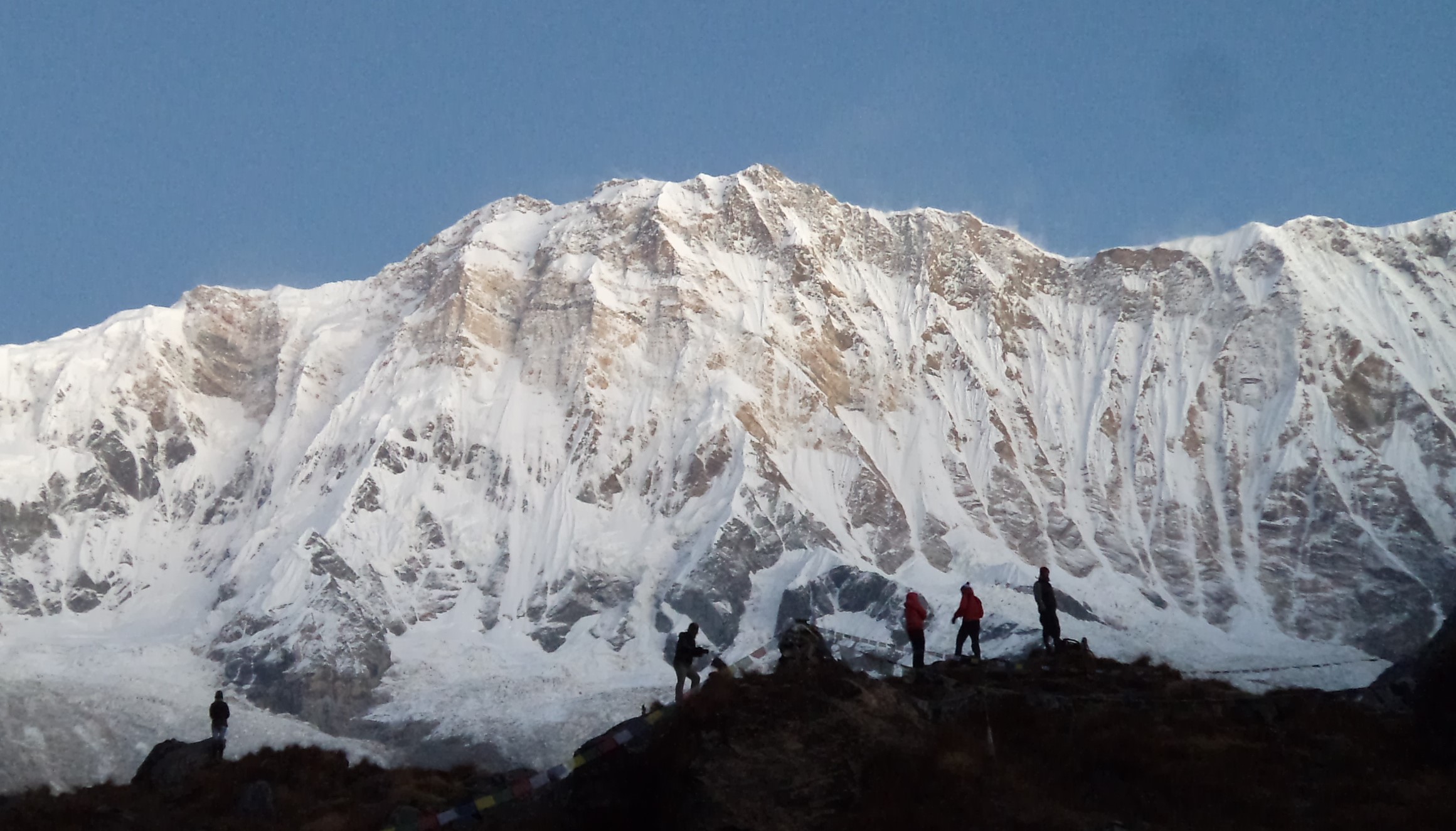
Annapurna Base Camp Trek—often celebrated as one of Nepal’s most rewarding Himalayan adventures—offers a perfect blend of natural beauty, cultural richness, and moderate trekking challenges. Situated at an impressive altitude of 4,130 meters, Annapurna Base Camp sits at the heart of the spectacular Annapurna Sanctuary, surrounded by some of the world’s most iconic mountains. Towering peaks such as Annapurna I (8,091 m), Annapurna South (7,219 m), Machapuchhre (6,993 m), and Hiunchuli (6,441 m) create an unforgettable amphitheater of snow and rock.
Trips Highlights
- Massive Himalayan Panorama: You’re surrounded by giants like Annapurna I (8,091 m), Machapuchare, Hiunchuli, and Annapurna South. At base camp, you stand inside a natural amphitheater of snow peaks—360° mountain views.
- Sunrise at Base Camp: Watching sunrise over the Annapurna range from ABC is unforgettable. The mountains glow golden—perfect for photography and a major emotional highlight.
- Annapurna Sanctuary Experience: The trek takes you into the protected Annapurna Conservation Area. You’ll see diverse ecosystems—from subtropical forests to alpine landscapes—all in one trek.
- Rhododendron Forests (Spring Season): Especially around Ghorepani and Chhomrong, forests bloom with colorful rhododendrons (Nepal’s national flower). This is one of the most beautiful parts of the trek.
- Gurung & Magar Culture: Villages like Chhomrong and Ghandruk offer insight into local culture, traditional houses, and warm hospitality.
- Modi Khola Valley: The trail follows the scenic Modi River valley with waterfalls, bamboo forests, and dramatic cliffs—especially between Bamboo, Dovan, and Deurali.
- Natural Hot Springs at Jhinu Danda: Near Jhinu Danda, you can relax in natural hot springs after days of trekking—great for sore muscles.
- Machapuchare Base Camp Stop: Before ABC, you’ll pass Machapuchare Base Camp—a stunning high-altitude campsite with incredible close-up views.
- Gradual Altitude Gain (Safer Trek): Compared to some other treks, ABC has a relatively steady ascent, making it more manageable for acclimatization.
- Diverse Terrain in Short Time:In about 7–12 days, you experience: Terraced farmland /Dense jungle/ Alpine zone / Glacier basin. Few treks pack this much variety in such a short time.
- Spiritual & Peaceful Atmosphere:The Annapurna Sanctuary is considered sacred by locals. The quiet, snowy environment feels very peaceful and remote.
Include
- Warm welcome with meeting and assistance upon arrival and departure at the airport or hotel by representatives from The Crampon for Nepal Travel
- All transfers and sightseeing tours by air-conditioned vehicle as per group size
- Non-alcoholic welcome drink on arrival at the hotel
- Accommodation in 3-star hotels in Kathmandu and Pokhara on twin/double sharing basis with breakfast
- Domestic flight from Kathmandu – Pokhara - Kathmandu
- Experienced, licensed local tour guide (English, Spanish, or other major languages) during sightseeing in Kathmandu
- All monument entrance fees as per the itinerary
- During Tea House Trek: Necessary trekking permits: ACAP (Annapurna Conservation Area Permit) and TIMS card
- Duffle bag for trekking and basic first aid kit
- Accommodation in tea houses/lodges on twin or dormitory sharing basis
- Three meals a day during trek (Breakfast, Lunch, and Dinner) & Tea twice daily. Please note that each meal is served as a single serving.
- Government-licensed English-speaking trekking guide
- One porter for every two trekkers (maximum 8 kg per trekker)
- One assistant guide for groups above 6 people
- Trekking staff costs including salary, insurance, food, and accommodation
- Emergency helicopter rescue arrangement (as per your insurance coverage)
- Farewell Dinner
- All applicable government taxes and service charges
Exclude
- International airfare to and from Kathmandu
- Excess baggage charges on domestic and international flights
- Nepal entry visa fee (payable in cash upon arrival at Kathmandu airport)
- Meals not mentioned in the itinerary
- Photography and video fees at monuments (if applicable)
- Charges for hot showers, Wi-Fi, and charging electronic devices during the trek
- Personal trekking equipment (sleeping bag, gear, etc.)
- Extra expenses due to unforeseen events (landslides, weather conditions, political unrest, strikes, etc.)
- Personal expenses such as laundry, phone calls, drinks, and snacks
- Tips for guides, porters, drivers, and restaurant staff (customary)
- Personal travel insurance (highly recommended, including helicopter rescue)
- Additional costs due to early return or extension of the trek/trip
- Any services not mentioned in the “Cost Includes” section
Trips Itinerary
The flight toward the Himalayas offers stunning aerial views of towering peaks such as Mt. Dorje Lakpa (6966m), Mt. Ganesh Himal (7422m), and Mt. Langtang (7277m), weather permitting, before bringing you into Kathmandu, the gateway to the Himalayas. After completing immigration procedures at the airport, a representative from Crampon for Nepal Travel will warmly welcome you and transfer you to your hotel.
The rest of the day is free for relaxation or personal activities. You may choose to explore Kathmandu, Nepal’s lively capital city, known for its rich culture, spiritual atmosphere, and sense of adventure. The city beautifully combines ancient traditions with modern life, where historic temples stand alongside busy marketplaces and peaceful monasteries. Visitors are greeted with genuine hospitality, making Kathmandu a perfect starting point to discover the timeless charm of Nepal.
Max Atltitude: 1330 m
Accommodattion: Hotel
Meal: Breakfast
The scenic flight from Kathmandu to Pokhara is one of the most beautiful short flights in Nepal, lasting around 25–30 minutes. During the journey, you can enjoy spectacular aerial views of the Himalayan range, including peaks like Annapurna, Machhapuchhre (Fishtail), and Dhaulagiri on clear days. This quick and comfortable flight saves long driving hours and offers a memorable introduction to the natural beauty of the region. Upon arrival in Pokhara, you will immediately notice the peaceful atmosphere and stunning mountain backdrop.
Free Time in Lakeside (Pokhara)
After reaching Pokhara, you will have free time to relax and explore the vibrant Lakeside area. Located beside the famous Phewa Lake, Lakeside is a lively yet peaceful place filled with cafes, restaurants, shops, and bars. You can enjoy a leisurely walk along the lakeshore, go boating on the lake, or simply sit and admire the reflection of the mountains in the water. It is also a great place to experience local culture, try Nepali or international food, and shop for souvenirs. This free time allows you to unwind and enjoy the natural beauty and relaxed lifestyle of Pokhara at your own pace.
Max Atltitude: 950 m
Accommodattion: Hotel
Meal: Breakfast
After Breakfast, Your journey begins from Pokhara with an early morning jeep drive toward Jhinu Danda. The drive takes around 2–3 hours, passing through beautiful countryside, terraced farmlands, small Gurung villages, and lush green hills. As you leave the city behind, the road becomes more rural and scenic, offering glimpses of rivers, waterfalls, and traditional village life along the way.
Jhinu Danda is well known for its natural hot springs located near the Modi Khola river, where trekkers often relax before or after their trek. From here, the trek begins with a steady uphill climb toward Chhomrong (2180m). The trail passes through dense forests of rhododendron and bamboo, especially beautiful during the blooming season in spring.
Along the way, you will cross suspension bridges over rushing rivers, walk through charming settlements, and enjoy stunning views of the Annapurna range, including the iconic Machhapuchhre (Fishtail). You may also encounter local villagers, mule caravans carrying supplies, and friendly teahouses where you can rest and enjoy simple meals.
As you approach Chhomrong, the landscape opens up, revealing a beautiful hillside village with incredible mountain views. Chhomrong is the gateway to the Annapurna Base Camp trek and offers a unique cultural experience, as it is one of the largest Gurung settlements in the region. The combination of natural beauty, cultural encounters, and mountain scenery makes this day both exciting and memorable.
Max Atltitude: 2180 m
Accommodattion: Trekking Lodges
Meal: Breakfast Lunch Dinner
The trek from Chhomrong to Dovan is a beautiful and varied day, taking you from a large Gurung village into deep forest and closer to the high Himalayan valley.
After breakfast in Chhomrong (2,180 m), the trail begins with a steep descent down stone steps to the Chhomrong Khola. You will cross a suspension bridge and then face a steady uphill climb to Sinuwa. From Sinuwa, the route enters dense forests of rhododendron, bamboo, and oak, offering a peaceful atmosphere with chances to see birds and wildlife. The trail is mostly gradual with some ups and downs as you pass through Bamboo and then continue further into the narrow Modi Khola valley.
As you move higher, the landscape becomes more rugged and cooler. After passing Bamboo (2,310 m), you will continue trekking through forested trails alongside the river until reaching Dovan (2,600 m), a small settlement surrounded by towering cliffs and lush greenery.
Duration: 5–7 hours
Max Atltitude: 2600 m
Accommodattion:Trekking Lodges
Meal:Breakfast Lunch Dinner
Starting from Dovan, the trail continues along the Modi Khola valley through dense forest. The path is relatively gradual at first, passing through thick bamboo and rhododendron jungle, with the sound of the river flowing beside you. The peaceful environment and fresh mountain air make this section very enjoyable.
After some time, you reach Himalaya, a small settlement surrounded by steep cliffs. From here, the landscape begins to change slowly—trees start thinning out, and the valley becomes narrower and more dramatic. You may notice waterfalls cascading from high rock walls, especially after rain.
Continuing onward, you arrive at Deurali. This is an important stop where trekkers usually rest and have lunch. The scenery here becomes more alpine, with fewer trees and more open terrain. You also pass through areas that can be prone to avalanches, so guides often advise moving carefully and steadily.
From Deurali, the trail enters a spectacular high-altitude landscape known as the “Hinku Cave” area, with massive rock overhangs and glacial riverbeds. As you climb higher, vegetation almost disappears, replaced by rocky terrain and snow patches (depending on the season). The valley opens up, offering your first close views of the surrounding Himalayan giants.
Finally, you reach Machhapuchhre Base Camp (3,700m), located at the base of the sacred Machhapuchhre (Fishtail). The views here are breathtaking—you are surrounded by towering peaks like Annapurna South, Hiunchuli, and Machhapuchhre itself. The feeling of being in the heart of the Himalayas is truly unforgettable.
Interesting things along the route:
• Gradual transition from dense forest to alpine and glacial landscape
• Waterfalls, cliffs, and narrow river valleys
• Hinku Cave and dramatic rock formations
• First close-up panoramic views of Annapurna and Machhapuchhre
• Unique high-altitude environment with fewer trees and more open sky
This part of the trek is one of the most exciting, as you leave the forest behind and enter the raw, majestic world of the high Himalayas.
Max Atltitude: 3700 m
Accommodattion: Trekking Lodges
Meal: Breakfast Lunch Dinner
The trek from Machhapuchhre Base Camp (around 3,700m) to Annapurna Base Camp (4,130m) is one of the most rewarding and scenic sections of the entire journey. The distance is relatively short, taking about 2–3 hours, but the experience is truly unforgettable.Leaving MBC early in the morning, you walk through a wide glacial valley surrounded by towering Himalayan peaks. The trail is gentle and gradual, making it easier compared to previous days, but the altitude makes the walk feel slower. As you move forward, the landscape is completely open and barren, with snow-covered ground in colder months and no trees—only rocks, ice, and massive mountains all around.
Along the way, you are fully surrounded by the Annapurna Sanctuary, a natural amphitheater of peaks. You will see breathtaking views of Annapurna I, Annapurna South, Hiunchuli, Gangapurna, and the iconic Machhapuchhre behind you. The sense of being deep inside the Himalayas is very powerful here.
Finally, you reach Annapurna Base Camp, a spectacular destination located right at the base of Annapurna I (8,091m), the 10th highest mountain in the world. The 360-degree panoramic view of snow-capped peaks is simply breathtaking. Sunrise and sunset from ABC are especially magical, as the mountains change color with the light.
Interesting things along the route:
• Wide glacial valley with dramatic open landscapes
• 360° mountain views inside the Annapurna Sanctuary
• Close-up views of some of the world’s highest peaks
• Unique high-altitude environment with snow and ice
• Peaceful and powerful feeling of being surrounded by giants
This short but iconic stretch is the highlight of the trek, bringing you face-to-face with the majestic heart of the Annapurna region.
Max Atltitude: 4130 m
Accommodattion: Trekking Lodges
Meal: Breakfast Lunch Dinner
After an unforgettable stay at Annapurna Base Camp (4,130m), the journey back begins with an early morning departure. You may enjoy a final sunrise over the Himalayas before retracing your steps down the valley. The trail gently descends toward Machhapuchhre Base Camp, offering one last chance to admire the breathtaking amphitheater of peaks.
From MBC, you continue downhill toward Deurali. As you lose altitude, the landscape gradually changes from a high alpine, snow-covered environment to rocky terrain with patches of vegetation. The wide glacial valley slowly narrows, and towering cliffs surround the trail.
Continuing further, you pass through Himalaya and make your way back into lush forest areas. The return journey feels different, as descending offers new perspectives of waterfalls, rock formations, and the deep Modi Khola valley. The air becomes warmer and richer in oxygen, making the walk more comfortable.
Finally, you arrive at Dovan, a peace and peaceful stop surrounded by dense forest and the sound of the river.
Interesting things along the route:
• Changing landscapes from snowy alpine zone to green forest
• Stunning backward views of Annapurna and Machhapuchhre
• Waterfalls and steep rocky cliffs along the valley
• Relaxing descent with increasing oxygen levels
• Quiet forest environment after the high mountain exposure
This day is long but rewarding, as you leave the high behind Himalayas and return to the calm, green beauty of the lower Annapurna region.
Max Atltitude: 2600 m
Accommodattion:Trekking Lodges
Meal: Breakfast Lunch Dinner
The trek from Dovan begins with a peaceful walk through dense forest along the Modi Khola valley. The trail gradually descends, with the sound of the river and waterfalls accompanying you throughout the journey. This section feels calm and refreshing as you move back toward lower altitude.
You first pass through Bamboo, where thick bamboo forests create a cool, shaded environment. This area has a jungle-like atmosphere, and you may spot birds and sometimes langur monkeys along the trees. The trail continues with a mix of gentle ups and downs.
From Bamboo, you continue toward Sinuwa, walking through beautiful rhododendron and oak forests. Along the way, you cross suspension bridges over the rushing river and pass small waterfalls and natural streams, making the route very scenic and enjoyable.
From Sinuwa, the trail becomes steeper as you descend toward Chhomrong Khola. This section involves a long stone staircase downhill, which can be tiring on the knees but offers great views of the valley and surrounding hills. After crossing the suspension bridge, you may stop briefly at Jhinu Danda or continue toward the hot spring area nearby.
Jhinu Danda is famous for its natural hot springs located beside the river. After a long trekking day, many trekkers enjoy soaking in the warm water to relax their muscles while surrounded by nature.
Interesting things along the route:
• Dense bamboo and rhododendron forests
• Suspension bridges over Modi Khola
• Waterfalls and peaceful jungle trails
• Wildlife such as monkeys and birds
• Steep stone staircases with valley views
• Natural hot springs at Jhinu Danda
This route is a beautiful combination of forest walking, river scenery, and relaxing natural hot springs—perfect for ending a long trekking journey in the Annapurna region.
Max Atltitude: 1780 m
Accommodattion:Trekking Lodges
Meal:Breakfast Lunch Dinner
From Jhinu Danda, your journey back to Pokhara usually begins after breakfast. First, you trek for a short distance (around 20–30 minutes) downhill to reach the road point near the river, or sometimes directly from Jhinu if transport is arranged closer. From here, you take a jeep drive back through beautiful hill roads, passing terraced fields, small villages, rivers, and green valleys. The drive typically takes around 3–4 hours depending on road and weather conditions.
Once you arrive in Pokhara, you transfer to your hotel near the famous Lakeside area.
Leisure Time in Pokhara (Lakeside Experience)
Your free time in Pokhara is one of the most relaxing parts of the entire journey. The Lakeside area is located beside the peaceful Phewa Lake, surrounded by mountains and a calm atmosphere.
During your leisure time, you can enjoy many activities at your own pace:
•Relax by the lakeside: Sit in cafés or benches and enjoy the view of the lake with reflections of the Annapurna range.
•Boating on Phewa Lake: You can take a wooden boat or paddle boat and visit the small island temple, Tal Barahi Temple.
•Walk in Lakeside streets: Explore shops, bakeries, handicraft stores, and lively restaurants.
•Food experience: Try Nepali, Tibetan, or international cuisine in cozy lakeside cafés.
•Relaxation time: After the trek, Pokhara is the perfect place to rest your body with a peaceful environment, spa options, or just a quiet evening by the lake.
•Sunset views: Enjoy a beautiful sunset over the lake with reflections of the mountains in the water.
Pokhara offers a perfect combination of natural beauty and comfort, making it an ideal place to relax after completing the Annapurna trekking journey.
Max Atltitude: 930 m
Accommodattion: Hotel
Meal: Breakfast. Lunch outside the Hotel.
Your day begins with a scenic flight from Pokhara to Kathmandu. The flight takes around 25–30 minutes and offers beautiful aerial views of the Himalayan range on clear days. You may see peaks like Annapurna, Manaslu, and Ganesh Himal as you fly over valleys, hills, and rivers. It is a comfortable and time-saving journey compared to road travel.
After arriving in Kathmandu and checking in to your hotel, you will have lunch and some time to relax. In the afternoon, you proceed for a cultural sightseeing tour of Patan Durbar Square.
Patan Durbar Square is one of the finest examples of ancient Newari architecture and a UNESCO World Heritage Site. It is located in the historic city of Patan (Lalitpur), just a short drive from central Kathmandu. The square is filled with beautifully carved temples, palaces, courtyards, and statues that reflect centuries of art and culture.
During your visit, you can explore highlights such as the Krishna Mandir, Golden Temple (Hiranya Varna Mahavihar), and the old royal palace area. The intricate wood and stone carvings, traditional courtyards, and living heritage atmosphere make this place very special.
You can also walk through the surrounding streets, where local artisans still practice traditional crafts, giving you a glimpse of Kathmandu Valley’s rich cultural life.
Highlights of the day:
•Scenic Himalayan flight from Pokhara to Kathmandu
•Comfortable arrival and hotel transfer
•Cultural sightseeing in Patan Durbar Square
•Ancient temples, palaces, and UNESCO heritage architecture
•Experience of Newari culture, art, and local life
This day beautifully combines natural Himalayan views with rich cultural exploration in the Kathmandu Valley.
Max Atltitude: 1330 m
Accommodattion:Hotel
Meal: Breakfast
Visit Kathmandu Durbar Square, a UNESCO World Heritage Site and one of the most important historical places in the city. It is like an open-air museum with many temples, courtyards, and old palaces built by the Malla kings.
Explore Kumari Ghar, where the Living Goddess (Kumari) lives. Sometimes, she appears at the window to greet visitors.
See Hanuman Dhoka, the old royal palace where Nepalese kings were crowned. At the entrance, there is a statue of the monkey god Hanuman.
Nearby, you can also see the large statue of Kal Bhairab and several other beautiful temples.
Visit Swayambhunath Stupa, a UNESCO World Heritage Site with a history of over 2,500 years. It sits on a hilltop and offers great views of the city. The area is also known for its many monkeys, so it is often called the Monkey Temple.
This sacred site is a mix of both Buddhist and Hindu traditions, with many shrines, chaityas, and monasteries around. Despite the 2015 earthquake, the stupa remains strong and is still one of Kathmandu’s most loved landmarks.
You can see beautiful carvings, smell incense and butter lamps, and experience a peaceful spiritual atmosphere. Visitors and devotees walk around the stupa (a ritual called circumambulation) while spinning prayer wheels set into its base. The area is also surrounded by traditional houses of priests and monks.
Visit Boudhanath Stupa, one of the largest and most peaceful stupas in the world and a UNESCO World Heritage Site. It is a very important place for Tibetan Buddhism.
The stupa stands tall with its white dome and the eyes of Buddha watching in all directions, symbolizing wisdom and compassion. Every day, monks and visitors walk around it, spinning prayer wheels and offering prayers.
The area around Boudha is calm and spiritual, filled with monasteries, small shops, and the soft sound of chanting. It is a perfect place to feel peace, culture, and devotion in a simple and beautiful way.
Max Atltitude: 1330 m
Accommodattion: Hotel
Meal:Breakfast
Airport Distance: 6 km (about 30 minutes drive)
Enjoy a relaxed breakfast. The morning is free for your own activities. At the scheduled time, you will be transferred to the airport for your departure flight.
We wish you a safe journey and hope to welcome you again in the future.
End of Service.
Meal: Breakfast
Packaging List – Annapurna Base Camp Trek
To ensure a safe and comfortable trekking experience, we recommend packing the following essential items. Please pack light, as your luggage will be carried by a porter (where included), while you carry only a small daypack during the trek.
Clothing
• Down jacket (essential for cold temperatures)
• Waterproof and windproof jacket
• Fleece jacket or warm sweater
• Thermal base layers (top and bottom)
• Moisture-wicking trekking T-shirts (2–3)
• Trekking pants (2 pairs)
• Waterproof trousers (recommended)
• Warm hat or beanie
• Sun hat or cap
• Lightweight gloves and warm gloves
• Comfortable underwear
• Trekking socks (4–5 pairs)
• Lightweight shoes or sandals for the lodge
Footwear
• Well-broken-in trekking boots with good ankle support
• Comfortable camp shoes or sandals
• Gaiters (optional during snow or muddy conditions)
Daypack Essentials
• Small backpack (25–35 liters)
• Rain cover for your backpack
• Reusable water bottles or hydration bladder (2 liters recommended)
• Water purification tablets or portable water filter
• Trekking poles (recommended)
• Sunglasses with UV protection
• Sunscreen (SPF 50+)
• Lip balm with SPF
• Headlamp with spare batteries
• Camera and spare batteries
• Power bank
• Personal snacks or energy bars
Personal Toiletries
• Toothbrush and toothpaste
• Soap or biodegradable body wash
• Shampoo (travel size)
• Quick-dry towel
• Wet wipes
• Hand sanitizer
• Toilet paper
• Nail clippers
• Comb or hairbrush
• Moisturizer
Personal Medications & First Aid
• Personal prescription medicines
• Basic first-aid kit
• Bandages and blister treatment
• Pain relievers
• Cold and flu medication
• Anti-diarrheal medicine
• Motion sickness medicine (if required)
• Diamox (Acetazolamide) for altitude sickness (consult your doctor before use)
• Insect repellent (especially during lower-altitude trekking)
Documents
• Passport
• Nepal visa (if applicable)
• Travel insurance covering high-altitude trekking
• Passport-sized photographs
• Copies of passport and insurance policy
• Cash in Nepalese Rupees for personal expenses
Electronics
• Mobile phone
• Camera
• Chargers
• Universal travel adapter
• Power bank
• Spare memory cards
Optional Items
• Sleeping bag (rated to approximately -10°C to -15°C, if preferred)
• Inflatable travel pillow
• Earplugs
• Binoculars
• Book or e-reader
• Notebook and pen
• Playing cards
Seasonal RecommendationsSpring (March–May)
• Light layers for warm afternoons
• Warm clothing for chilly mornings and nights
• Rain jacket for occasional showers
Autumn (September–November)
• Warm layers for cool mornings and evenings
• Waterproof jacket in case of late-season rain
Winter (December–February)
• Extra thermal layers
• Heavy down jacket
• Insulated gloves
• Thick wool socks
• Neck gaiter or scarf
Important Notes
• Pack as lightly as possible to make your trek more comfortable.
• Dress in layers, as temperatures vary significantly between lower villages and Annapurna Base Camp.
• Weather in the Himalayas can change quickly, so waterproof clothing is highly recommended.
• Keep your passport, valuables, medications, camera, water, and warm clothing in your daypack at all times.
• Avoid bringing unnecessary valuables or excessive luggage.
Trips FAQs
1. Where is Annapurna Base Camp?
Annapurna Base Camp (ABC) is located in the Annapurna Conservation Area of central Nepal at an altitude of 4,130 meters (13,550 feet). It lies at the foot of Mt. Annapurna I (8,091 m), the 10th highest mountain in the world.
2. How difficult is the Annapurna Base Camp Trek?
The Annapurna Base Camp Trek is considered a moderate trek. It is suitable for beginners with a good level of fitness as well as experienced trekkers. Daily walking usually takes 5–7 hours on well-established mountain trails.
3. How many days does the trek take?
Depending on your itinerary, the trek can be completed in 6 to 12 days. The classic itinerary usually takes 9–11 days, including travel to and from Pokhara.
4. What is the best time to trek to Annapurna Base Camp?
The best seasons are:
• Spring (March to May): Clear mountain views and blooming rhododendron forests.
• Autumn (September to November): Stable weather, excellent visibility, and comfortable temperatures.
Winter trekking is also possible, while the monsoon season (June to August) brings heavy rainfall and slippery trails.
5. What is the highest point of the trek?
The highest point is Annapurna Base Camp at 4,130 meters (13,550 feet).
6. Is altitude sickness a concern?
Although ABC is lower than Everest Base Camp, altitude sickness can still occur. Proper acclimatization, drinking plenty of water, and maintaining a comfortable walking pace help reduce the risk.
7. Do I need previous trekking experience?
No. Previous trekking experience is helpful but not required. Anyone with reasonable fitness and determination can complete the trek with proper preparation.
8. Do I need a guide?
Hiring a licensed guide is highly recommended for safety, local knowledge, and a more enjoyable experience. Current trekking regulations may also require foreign trekkers to be accompanied by a licensed guide in many trekking areas of Nepal.
9. What permits are required?
You will need:
• Annapurna Conservation Area Permit (ACAP)
• TIMS Card (where applicable according to current regulations)
Our company arranges all required permits before the trek begins.
10. What kind of accommodation is available?
Accommodation is in comfortable local teahouses (mountain lodges). Most rooms are twin-sharing with shared bathrooms, while some lower villages offer attached bathrooms.
11. What food is available during the trek?
Teahouses offer a wide variety of meals, including:
• Dal Bhat (traditional Nepali meal)
• Fried rice
• Noodles
• Pasta
• Soups
• Momos
• Pancakes
• Eggs
• Tea and coffee
Vegetarian meals are widely available.
12. Is drinking water available?
Yes. Safe drinking water is available along the trail through boiled water, filtered water, or purification tablets. We recommend carrying a reusable water bottle.
13. Is there electricity and Wi-Fi?
Most teahouses provide electricity for charging electronic devices. Wi-Fi is available in many villages, although connections become slower at higher elevations and may require an additional fee.
14. What should I pack?
Essential items include:
• Warm clothing
• Waterproof jacket
• Comfortable trekking boots
• Sleeping bag (recommended)
• Trekking poles
• Sunglasses
• Sunscreen
• Hat and gloves
• Personal medications
• Reusable water bottle
• Headlamp
15. Can I charge my phone and camera?
Yes. Most teahouses provide charging facilities for a small extra charge.
16. Is travel insurance necessary?
Yes. We strongly recommend comprehensive travel insurance that covers trekking up to 4,500 meters, including emergency helicopter evacuation.
17. Are porters available?
Yes. Porters can carry your luggage, allowing you to enjoy the trek more comfortably. One porter usually carries luggage for two trekkers, with a recommended combined limit of around 20–24 kg.
18. Can I trek during winter?
Yes. Winter (December to February) offers peaceful trails and beautiful snowy landscapes. However, temperatures can fall well below freezing, and heavy snowfall may occasionally affect the route.
19. Is Annapurna Base Camp Trek suitable for families?
Yes. Families with active children and healthy senior travelers have successfully completed the trek. A customized itinerary with additional rest days is recommended.
20. Why book the Annapurna Base Camp Trek with us?
We provide experienced government-licensed trekking guides, reliable porters, carefully planned itineraries, comfortable accommodation, 24/7 support, permit arrangements, safety-first service, and personalized trekking experiences to ensure an unforgettable Himalayan adventure.
The best time to undertake the Annapurna Base Camp Trek is during spring (March to May) and autumn (September to November). These seasons offer pleasant temperatures, stable weather, and excellent visibility of the Annapurna Himalayan range. Spring transforms the trail with blooming rhododendron forests and lush greenery, while autumn provides crystal clear skies and stunning mountain panoramas. These ideal trekking conditions make the journey safer, more comfortable, and perfect for enjoying the spectacular landscapes of the Annapurna Conservation Area.
The Annapurna Base Camp Trek is considered a moderately challenging trek that is suitable for beginners as well as experienced hikers. Trekkers typically walk between 5 and 7 hours each day through forests, stone staircases, terraced fields, and alpine landscapes. Although no technical climbing skills are required, participants should have a good level of physical fitness and endurance. With proper preparation, a steady pace, and guidance from experienced trekking professionals, most healthy individuals can successfully complete this unforgettable Himalayan adventure.
The highest point of the Annapurna Base Camp Trek is Annapurna Base Camp (4,130 meters / 13,550 feet), located within the breathtaking Annapurna Sanctuary. Surrounded by towering snow-covered peaks including Annapurna I, Annapurna South, Hiunchuli, and Machhapuchhre (Fishtail), the base camp offers one of the most spectacular mountain panoramas in Nepal. While the altitude is significantly lower than Everest Base Camp, trekkers should still ascend gradually and stay well hydrated to ensure a safe and enjoyable experience.
The Annapurna Base Camp Trek follows a well-developed teahouse trekking route, where trekkers stay in comfortable family-run lodges offering basic yet cozy accommodation. Most teahouses provide twin-sharing rooms, warm dining halls, and freshly prepared meals such as dal bhat, noodles, pasta, fried rice, soups, momos, eggs, pancakes, and seasonal vegetables. Staying in these mountain lodges allows trekkers to enjoy authentic Nepalese hospitality while experiencing the unique culture and traditions of the Annapurna region.
The Annapurna Base Camp Trek offers an incredible combination of natural beauty, cultural experiences, and breathtaking mountain scenery. Trekkers pass through traditional Gurung villages, dense rhododendron and bamboo forests, cascading waterfalls, and scenic river valleys before reaching the stunning Annapurna Sanctuary. The highlight of the journey is standing at Annapurna Base Camp, surrounded by magnificent Himalayan peaks including Annapurna I, Machhapuchhre, Hiunchuli, and Annapurna South in a spectacular natural amphitheater.
Reviews

Challenging but Rewarding
This trek tested my limits, but the reward was seeing the untouched Dolpo region. From high-altitude passes to the serene Shey Phoksundo Lake, every moment was magical. The guides ensured safety and comfort throughout. I can’t wait to return!

Emily Walker
,UK